Commercial Mold Remediation in Sandstone, IN
Sandstone facilities managers get a written scope with readings behind it before a single assembly comes apart.
Sandstone Water Restoration handles Commercial Mold Remediation for Sandstone homes the methodical way: scheduled inspection, moisture readings, written scope, then the work. Insurance coordination included on approved claims. Call (463) 223-3831 to book.
- Service: Commercial Mold Remediation for Sandstone homeowners
- Service area: Sandstone, IN and surrounding areas
- Response time: Prompt scheduling for Sandstone assessments, most booked within a day
- Licensed and insured (License #RC21100059)
- Serving Sandstone, IN since 2018
Commercial Mold Remediation for Sandstone Businesses
An industrial hygienist report lands on your desk with a recommended scope, and now you need somebody who can execute it. Sandstone Water Restoration works from third party protocols on Sandstone commercial jobs, builds the containment the protocol calls for, runs negative pressure with HEPA filtration, and leaves the clearance decision to the hygienist who wrote it, so the party checking the work is separate from the party doing it.
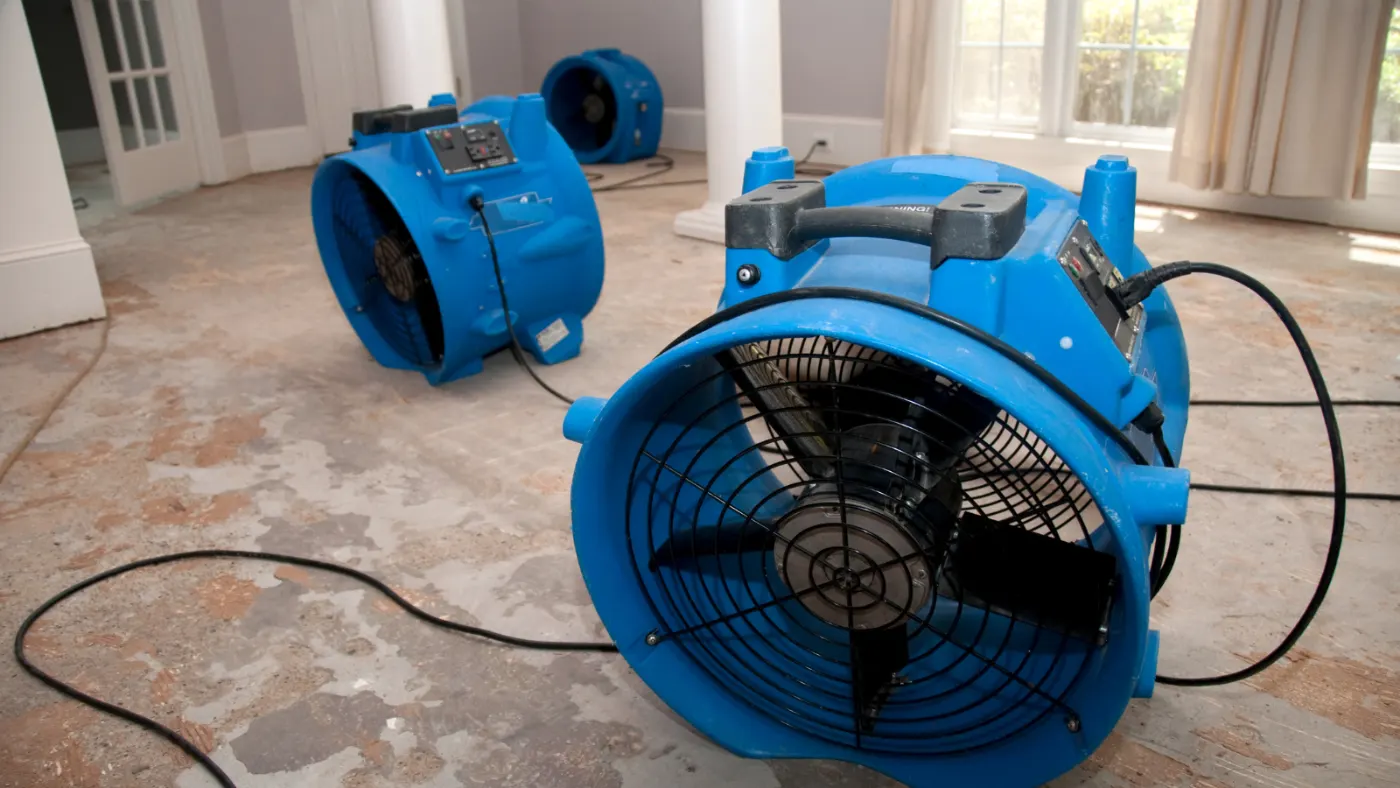
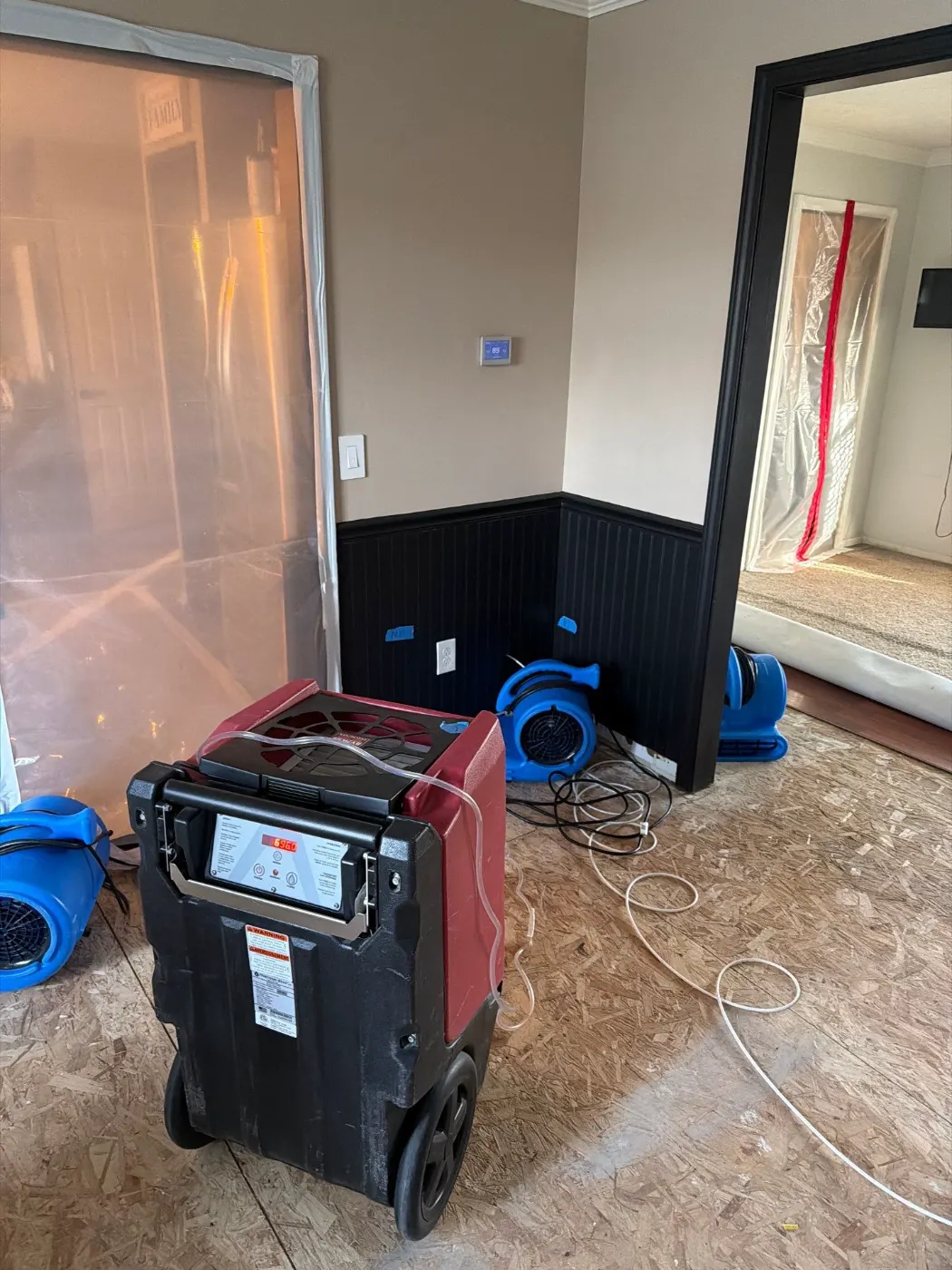
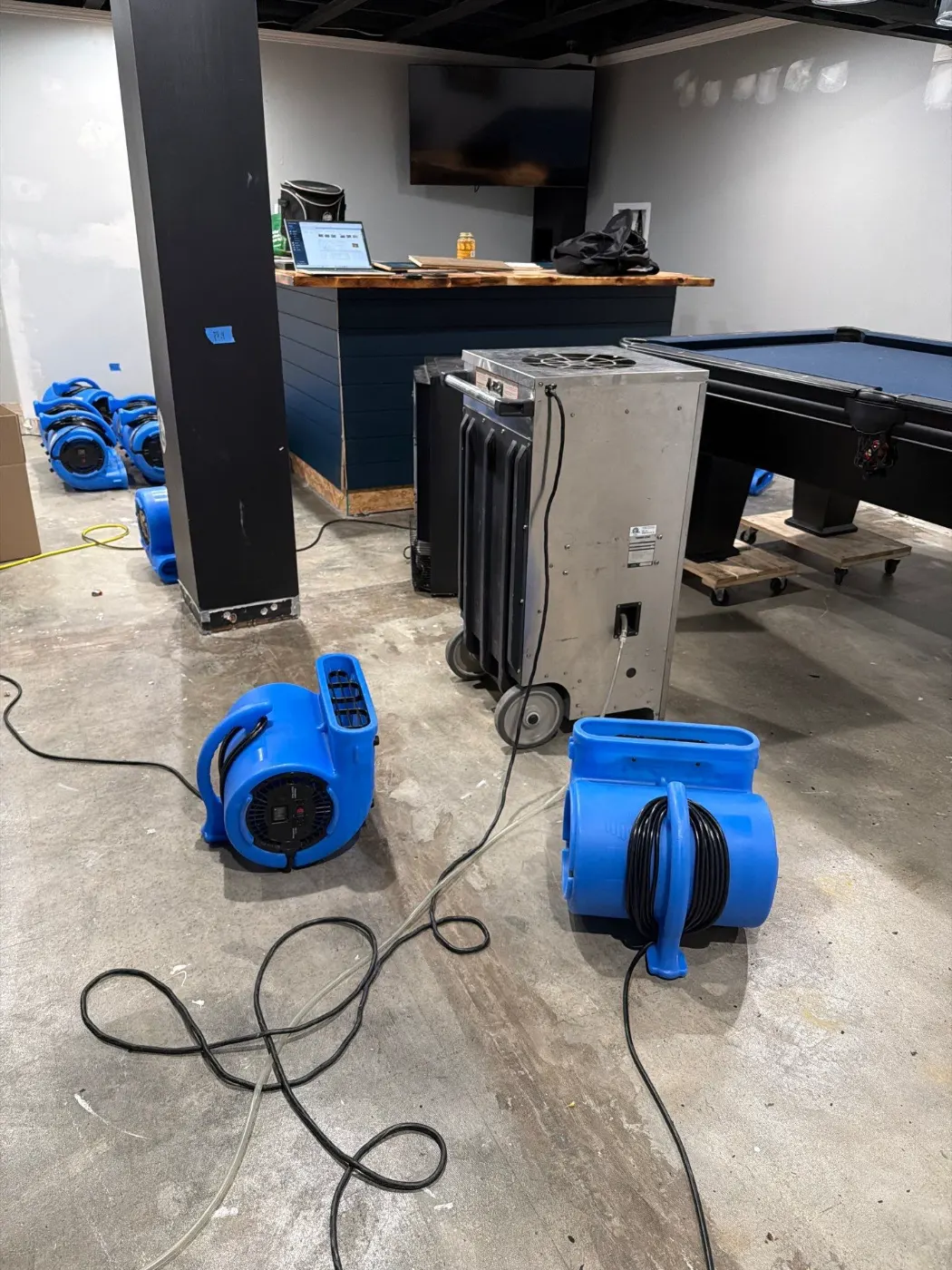
Closing a wall over damp framing is how a second remediation gets scheduled, so Sandstone Water Restoration dries the structure before anything goes back. Dehumidifiers and air movers run inside the containment, a technician logs moisture content daily at marked locations, and the rebuild waits until the readings in your Sandstone building match unaffected areas. The final readings go in your file.
Air handling gets addressed as part of the work, since a running system is the fastest way to spread what you're trying to contain. The Sandstone Water Restoration crew seals the zone's registers inside containment and coordinates with your building engineer on shutting down or rebalancing the affected air handler. Growth inside the unit or on the duct insulation gets flagged for your HVAC contractor to address.
Commercial property policies typically ask the insured to take reasonable steps to limit further damage once a loss is found. Shutting off the water and moving contents out of harm's way are the usual examples, so keep the receipts and a short log of who did what and when. Sandstone Water Restoration adds its own containment and drying records to that log for your Sandstone property.
Plain descriptions are enough when you call. Tell Sandstone Water Restoration what you're seeing in your Sandstone shop or office, whether that's a stain or a smell, and the team will sort out what the first visit should cover. The inspection gets scheduled around your business hours.
Signs You Need Commercial Mold Remediation
If you notice any of these in your Sandstone building, schedule a free inspection before the issue worsens.
Relative humidity in the space that stays high even with the mechanical equipment running normally
Staining that reappears in the same ceiling location after the roof was already repaired
Rust or corrosion along the bottom track of metal studs where a wall has been opened
Patched drywall with a stain halo that keeps widening around the repair
White crusting or powdery residue on a below grade wall that returns after it's wiped off
Door frames and wood casing that have swollen and stained near an exterior entry
Standing water sitting in a condensate pan that should have drained hours ago
Pipe insulation above the ceiling that's wet or hanging loose from a chilled water line
Water cleanup by maintenance staff that used fans alone, with the walls never opened
A damp smell in a main lobby or stairwell that nobody noticed six months ago
How Sandstone Water Restoration Handles Commercial Mold Remediation
We follow these steps in order on every Sandstone job.
Inspection and Moisture Survey
Crews walk the affected area with thermal imaging and penetrating moisture meters, lift ceiling tiles where readings justify it, and open small inspection ports in wall assemblies. The survey defines the real boundary of the growth and identifies where the water is arriving from.
Stopping Active Water
If water is still arriving, stopping it comes before anything else. The crew works with the building engineer to find the valve or penetration involved, then controls it temporarily so the area stops getting wetter while the scope is written.
Removal Sign-Off Inspection
After removal and before cleaning, the crew lead walks every opened cavity and checks the cut lines against the survey. Photographs and readings document the condition of each cavity at sign off.
Containment Teardown
Once cleaning and any verification are complete, the crew HEPA vacuums the barrier and folds the poly inward as it comes down. Negative air machines run until the last sheet is off the framing, and the floor gets a final wipe.
HVAC Restart and Filter Change
After containment is down, the building engineer changes the filters on the affected air handler and restarts it with the registers unsealed. Any duct work flagged earlier goes to your HVAC contractor first.
Commercial Mold Remediation in Sandstone
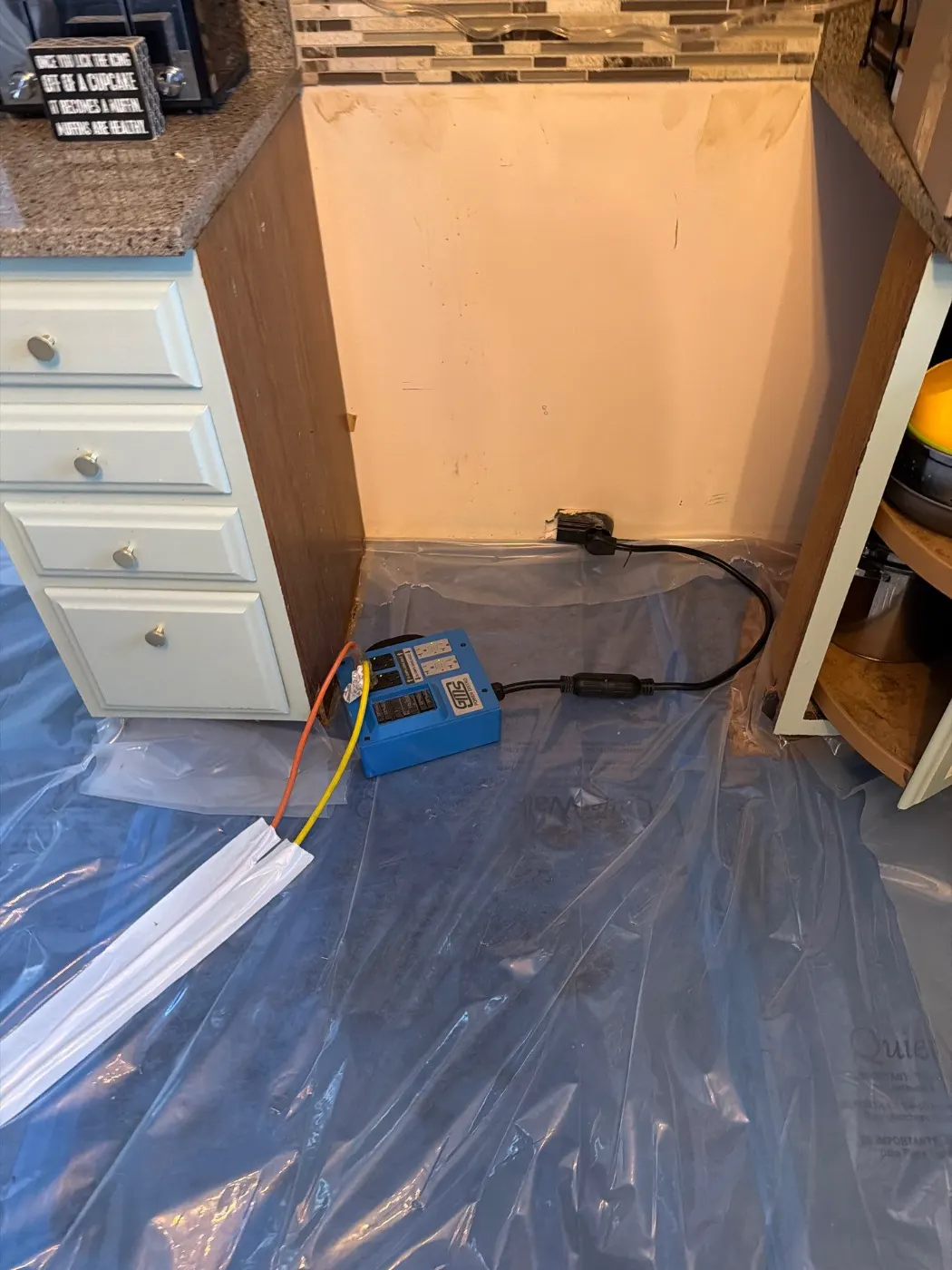
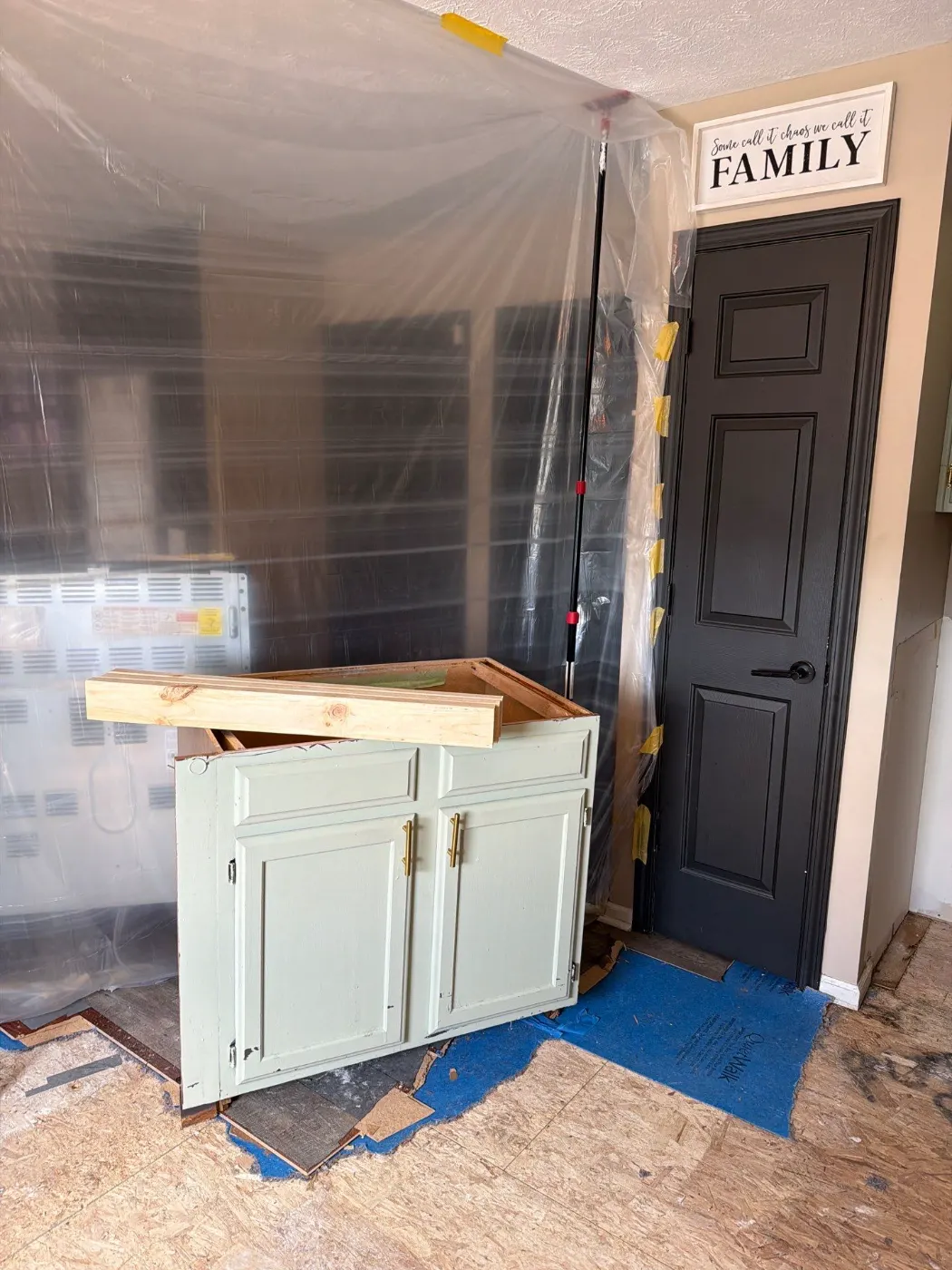
Photographs from real commercial mold remediation jobs completed by our crew in Sandstone and surrounding areas.
Commercial Mold Remediation FAQ
Questions Sandstone property managers ask us about commercial mold remediation.
Guidance and Standards for Commercial Mold Remediation
- The ANSI/IICRC S520 is the published standard for professional mold remediation. The current edition is the Fourth Edition, 2024. IICRC S520 Standard
- EPA’s mold guide says the key to mold control is moisture control. EPA: A Brief Guide to Mold, Moisture and Your Home
Sandstone Neighborhoods We Serve
We take commercial mold remediation calls in every part of Sandstone. Pick your neighborhood for local details.
Other Restoration Services in Sandstone
Sandstone Water Restoration handles the full scope of restoration work. Explore our other services below.
Water Damage Restoration in Sandstone
24/7 emergency response. IICRC certified water restoration from extraction to full dry out.
Learn more →Basement Flooding in Sandstone
Basement water emergencies handled fast. Extraction, drying, mold prevention.
Learn more →Sewage Cleanup in Sandstone
Category 3 biohazard cleanup. Full containment, decontamination, structural restoration.
Learn more →Request Commercial Mold Remediation
Reach Us Directly
Our team is available 24/7 for emergencies and ready to schedule inspections during business hours.
Need Immediate Help?
For active water or mold emergencies, call us directly. We are available 24/7.